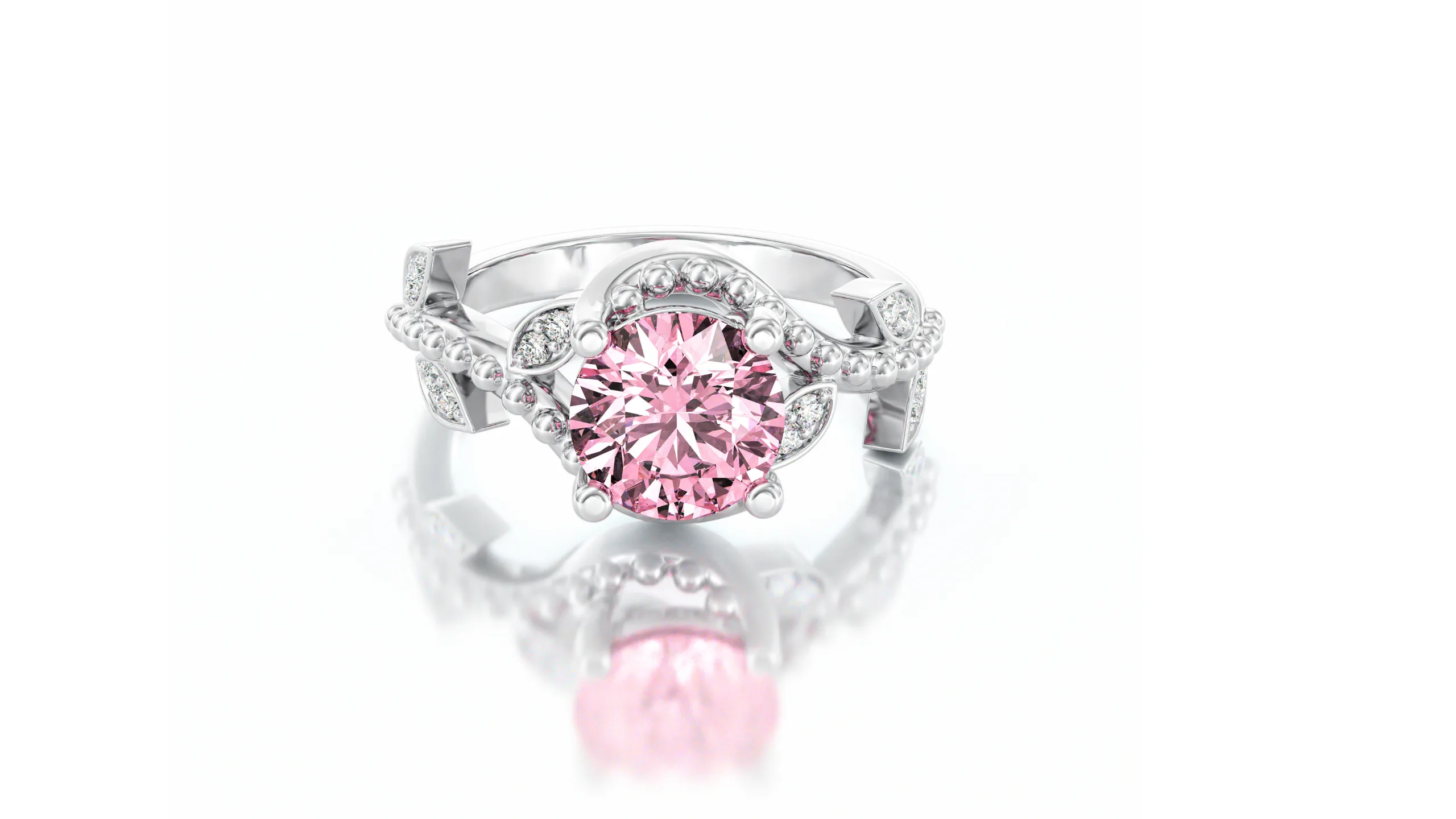
The diamond cut refers to how a diamond has been expertly shaped and faceted from its rough form — not to be confused with the diamond shape (like round, oval, or pear), which describes the outer contour of the stone. Cut is the single most important factor influencing how light travels through a diamond — and ultimately, how much it sparkles.
A diamond with perfect colour and clarity but a poor cut will look dull and lifeless. Conversely, a well-cut diamond with lower grades in other areas can outshine all others. Cut is king.
Why is Diamond Cut So Important?
A diamond's cut determines how well it interacts with light through three optical phenomena: brilliance (white light reflected back), fire (coloured light dispersion), and scintillation (sparkle when the diamond moves). An Ideal cut maximises all three simultaneously.
The Most Popular Diamond Cuts
Each cut shape has a distinct personality. From the timeless round brilliant to the dramatic marquise, the shape you choose reflects your personal style and the setting it will live in.
Cut Grade Scale
The GIA and IGI both grade round brilliant diamonds on a five-point cut scale. For lab-grown diamonds, we exclusively recommend Ideal or Excellent cuts.
Key Elements That Influence Cut Quality
Certification: GIA vs. IGI
GIA (Gemological Institute of America) is widely considered the gold standard for diamond grading — strict, consistent, and globally trusted. IGI (International Gemological Institute) has become the preferred certifier for lab-grown diamonds, offering equally reliable grading at faster turnaround times.
At Laboratory Diamonds, we exclusively source stones graded Ideal or Excellent cut by GIA or IGI — ensuring every diamond delivers superior brilliance, fire, and scintillation. We never compromise on cut quality.
Conclusion: Cut Defines the Sparkle
Of all the 4Cs, cut is the one quality that is entirely in human hands — no amount of nature's luck can replace the precision of an expert cutter. When choosing your lab-grown diamond, always prioritise cut above all other factors. A well-cut stone will consistently outperform a larger, higher-clarity stone with a mediocre cut.